Social Work in Action: Supporting Patients Beyond the Diagnosis
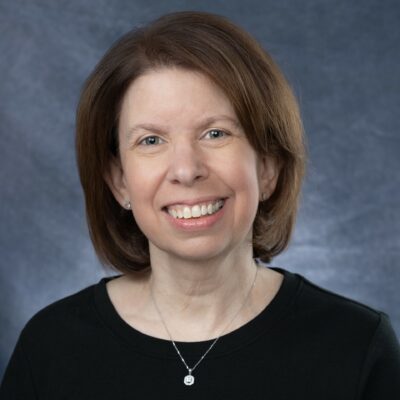
Rachel Saks, MSS, LSW, OSW-C
A cancer diagnosis doesn’t just change a person’s health. It changes their entire life.
There are questions, fears, logistical challenges, and deeply personal moments that medicine alone cannot address.
That’s where social workers step in.
They are often the steady presence guiding patients and families through uncertainty, helping them navigate not only the healthcare system, but also the emotional and practical realities that come with a cancer diagnosis.
In honor of Social Work Awareness Month, we’re recognizing the vital role social workers play in cancer care and the impact they have on patients, families, and communities every day.
For Rachel Saks, MSS, LSW, OSW-C, oncology social worker and Director of Programs at the Foundation for Women’s Cancer, this work is both a calling and a commitment shaped by decades of experience.
A Path Rooted in Purpose
Rachel’s journey into social work began with a desire to support communities in meaningful, lasting ways.
“I’ve always been driven to help those in need, providing support, resources, and guidance,” she shares. “Social work offered a broader, macro perspective and the ability to make an impact in many ways.”
Her path to oncology social work took shape early in her career at Doylestown Hospital, where she worked in case management and collaborated closely with oncology teams. When the opportunity arose to support the Cancer Center in implementing a new distress screening process, she stepped in and discovered her passion.
At the time, there was no dedicated oncology social worker.
Rachel helped change that.
By building relationships with patients and staff, identifying unmet needs, and working alongside leadership, she helped establish the hospital’s first oncology social work role, transforming a gap in care into a structured, patient-centered resource.
More Than Resources: A Holistic Approach to Care
One of the most common misconceptions about social work in healthcare is that it’s limited to connecting patients with services.
In reality, the role is far more expansive than most people realize.
“Social workers approach care from a holistic, psychosocial perspective,” Rachel explains. “We’re not only addressing practical obstacles, but also providing emotional support, promoting wellness, and supporting the entire family throughout the care experience.”
This perspective is especially critical in cancer care, where patients often face layered challenges that extend far beyond their diagnosis.
The Moments That Stay With You
Over the years, Rachel has supported countless patients, each with their own story, strength, and set of challenges.
One experience, in particular, continues to shape how she approaches her work.
She recalls working with a young mother of two who was diagnosed with late-stage pancreatic cancer. While navigating treatment, Rachel helped her secure practical support, like access to a second car, so she could attend daily appointments while her husband continued working.
Despite the circumstances, the patient remained focused on what mattered most: living fully and being present for her children.
“She never asked for help,” Rachel says. “Her focus was on her family and their future.”
Although the patient’s disease progressed quickly, her resilience and determination left a lasting impact.
“That experience reminds me to help patients tap into their own strength, hope, and determination, even in the most difficult moments.”
What Patients Need Most
For patients and families navigating a gynecologic cancer diagnosis, medical care is only one part of the equation.
“What they need most is to be truly seen and heard,” Rachel says.
Beyond physical health, patients often face emotional challenges, concerns about intimacy, disruptions to daily life, and questions about quality of life.
Each person’s experience is deeply personal and entirely unique.
Supporting them means listening, understanding their priorities, and helping them move forward in ways that reflect what matters most to them.
Staying Grounded in the Work
The emotional demands of social work are significant, but so is the sense of purpose that comes with it.
“What keeps me grounded are the patients and families I work with,” Rachel shares. “Their resilience inspires me every day.”
She is also motivated by the opportunity to improve health outcomes, reduce barriers to care, and expand access for all communities. This work is strengthened through collaboration with mission-driven teams.
“Together, we support one another while making a meaningful difference.”
From Patient Stories to Program Impact
Today, as Director of Programs at the Foundation for Women’s Cancer, Rachel brings more than two decades of frontline experience into her leadership.
“I carry with me the stories of the people I’ve worked with for over 27 years,” she says. “Their courage, struggles, and determination guide everything we do.”
Those lived experiences shape the programs FWC develops, the resources it provides, and the way it serves patients and communities.
“Listening to these voices helps us build services that are not only meaningful, but truly transformative.”
This Social Work Awareness Month, we celebrate Rachel and the thousands of social workers whose compassion, advocacy, and dedication strengthen cancer care every day.